


Source : https://www.dailynewsegypt.com
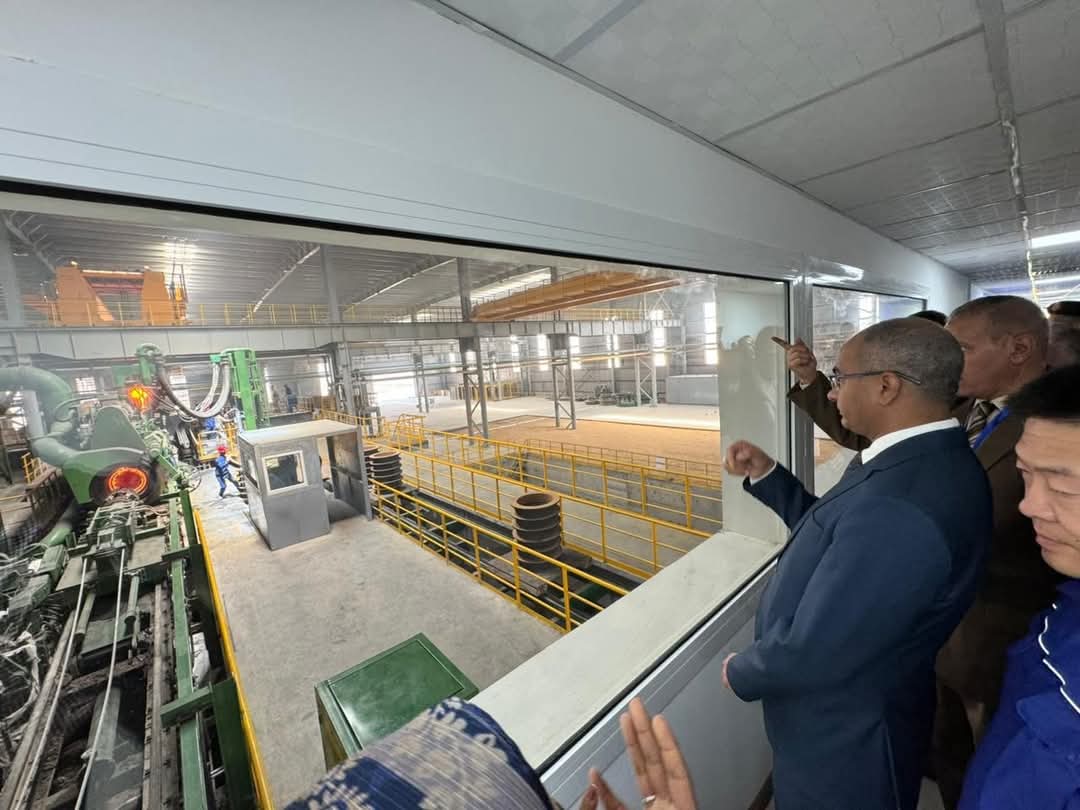
Deputy Minister of Housing, Utilities, and Urban Communities, Sayed Ismail, toured the Suez Canal Economic Zone (SCZONE) this week, visiting the newly established Chinese Xinxing factory for ductile iron pipe production.
During his visit, Ismail inspected all stages of the manufacturing process—from the assembly of local components and smelting, to centrifugal casting, protective coating application, and final product testing. He was briefed by Xinxing officials on the company’s global experience in large-scale infrastructure projects and its interest in partnering with Egyptian firms and entities affiliated with the Ministry of Housing.
The Deputy Minister emphasized the strategic significance of the Xinxing plant, which aims to localize the production of ductile iron pipes—critical components in major national infrastructure and utility projects. By producing locally, the plant will help reduce reliance on imports, lower procurement costs, and support exports to African and Gulf markets.
Xinxing representatives noted that the facility, located within the “TEDA–Egypt” industrial zone in the Suez Canal Economic Zone, spans an area of 270,500 square meters. The total investment in the project stands at approximately $150m.
The plant is expected to create 700 direct jobs and an additional 220 indirect employment opportunities. It boasts an annual production capacity of 250,000 tonnes of ductile iron pipes, with diameters of up to 2,600 mm, tailored to the specifications of various national projects.
Ismail reaffirmed the Ministry’s full support for the initiative, in line with Egypt’s broader national strategy to expand domestic manufacturing capabilities and open new export markets across Africa and the Arabian Gulf. He also underscored the importance of competitive pricing and the prioritization of local content in procurement by government-affiliated bodies.
“These serious investments reflect the confidence of international companies in Egypt’s industrial potential,” he said, expressing optimism about further opportunities for industrial cooperation across Egypt’s 27 governorates and 44 new cities.
 Vous aimez la fonderie et la forge ? Aidez-les à durer
 Adhérer à l’AAESFF, ce n’est pas une formalité. C’est un acte fort
 Organiser les Fondériales
 Réindustrialisation, métiers en tension…
 Rejoignez l’AAESFF dès maintenant


































Le vice-ministre du Logement, des Services publics et des Communautés urbaines, Sayed Ismail, a visité cette semaine la zone économique du canal de Suez (SCZONE), où il s’est rendu dans la nouvelle usine chinoise Xinxing dédiée à la production de tuyaux en fonte ductile.
Au cours de sa visite, M. Ismail a inspecté toutes les étapes du processus de fabrication — de l’assemblage des composants locaux et la fusion, jusqu’au moulage centrifuge, à l’application des revêtements protecteurs et aux tests finaux des produits. Les responsables de Xinxing l’ont informé de l’expérience mondiale de l’entreprise dans les projets d’infrastructure à grande échelle, ainsi que de son intérêt à collaborer avec des entreprises égyptiennes et des entités affiliées au ministère du Logement.
Le vice-ministre a souligné l’importance stratégique de l’usine Xinxing, qui vise à localiser la production de tuyaux en fonte ductile — des composants essentiels dans les grands projets nationaux d’infrastructure et de services publics. En produisant localement, l’usine contribuera à réduire la dépendance aux importations, à abaisser les coûts d’approvisionnement et à soutenir les exportations vers les marchés africains et du Golfe.
Les représentants de Xinxing ont indiqué que l’installation, située dans la zone industrielle « TEDA–Égypte » au sein de la zone économique du canal de Suez, couvre une superficie de 270 500 mètres carrés. L’investissement total dans le projet s’élève à environ 150 millions de dollars.
L’usine devrait créer 700 emplois directs et 220 emplois indirects supplémentaires. Elle dispose d’une capacité de production annuelle de 250 000 tonnes de tuyaux en fonte ductile, avec des diamètres allant jusqu’à 2 600 mm, adaptés aux spécifications de divers projets nationaux.
M. Ismail a réaffirmé le plein soutien du ministère à cette initiative, conformément à la stratégie nationale plus large de l’Égypte visant à développer les capacités de production locales et à ouvrir de nouveaux marchés d’exportation en Afrique et dans le Golfe. Il a également insisté sur l’importance de la compétitivité des prix et sur la priorité à accorder au contenu local dans les achats effectués par les organismes gouvernementaux.
« Ces investissements sérieux reflètent la confiance des entreprises internationales dans le potentiel industriel de l’Égypte », a-t-il déclaré, exprimant son optimisme quant aux futures opportunités de coopération industrielle dans les 27 gouvernorats et les 44 nouvelles villes du pays.